Mobilfunkstandard wurde für Geheimdienste geschwächt
Duquenne with
GSM-phones.FOTO: Jon Hauge2 Sources: We were pressured to weaken the mobile security in the 80's Arild Færaas Aftenposten | Oppdatert: 25.des. 2014 14:59
Four men who were part of a group that wrote mobile history tell for the
first time how strong protection against eavesdropping of cell phones
was weakened. Leaked Snowden documents that Washington Post has published, show that
the US intelligence agency National Security Agency (NSA) breaks one of
the encryption standards that are used to protect cell phones from
eavesdropping. Encryption is like a mathematical lock that prevents hackers and others
from opening the encrypted content. It is the A5/1-encryption standard which can be broken, a standard which
is used by many cell phone users both in Norway and the rest of the
world. Here is the story about how the A5/1-encryption standard is much weaker
than it probably could have been. The birth of GSM Experts from all over Western Europe came together in 1982 to build a
new system for mobile telephones. The system was realised 10 years
later, and is the one we now call GSM. Jan Arild Audestad has been an employee of Telenor in many years and has
also been a professor at Gjøvik Universty College and the Norwegian
University of Science and Technology. - Originally we proposed that the encryption key length should be 128
bit, because we knew little about cryptographic systems, and how secure
they were. The request was that the keys and algorithms should be secure
at least for 15 years after the installation, Audestad tells. A bit is the least component in digital information. A bit can be set to
0 or 1. - Pushed by the Brits But why was the result not 128 bit? The A5/1-encryption is still only 54
bit. The difference can be illustrated by numbers (see the more detailed
description to the right of this article). Or with the thickness of a
door to a safe. For every bit the encryption is increased, the thickness
of the safe door is doubled – instead of having a safe which is a few
centimetres thick, the safe is expanding far into the universe.
Jan Arild Audestad was a part of the team that built the GSM network.
Dan Petter Neegaard Audestad says that the British were not very interested in having a
strong encryption. And after a few years, they protested against the
high security level that was proposed. - They wanted a key length of 48 bit. We were very surprised. The West
Germans protested because they wanted a stronger encryption to prevent
spying from East Germany. The compromise was a key length of 64 bit –
where the ten last bits were set to zero. The result was an effective
key length of 54 bit. Do you have any information about this story? Contact the journalist on
e-mail - Still angry Aftenposten has spoken to several people who together with Audestad
co-operated on building the GSM network. One of them is Peter van der Arend from Netherlands. He tells
Aftenposten how he «fought» with the British about this case –
especially in a meeting in Portugal. - The British argued that the key length had to be reduced. Among other
things they wanted to make sure that a specified Asian country should
not have the opportunity to escape surveillance. Van der Arend was very opposed to the British proposal. - The length was increased by the British – two bits at the time. They
did not want to go further than 54 bits. And even though I argued
against it, I eventually lost support from the others. And from that
moment we had weaker security, and I am still angry about this. Thomas Haug, who was one of the most central persons in the making of
GSM, also says that he was put pressure on by the British. - I was told by a British delegate that the British secret services
wanted to weaken the security so they could eavesdrop more easily. Cold war Despite glasnost and perestroika towards the end of the 1980’s, the cold
war was still ongoing, the Berlin Wall had still not fallen, and the
suspicion between the West and the East was huge. According to our sources, this also affected the work with GSM. As it is
today, it was not easy to find the right balance between the
individual’s right to privacy, and the states’ need for spying and
intelligence. Audestad says that he does not know why the UK wanted a weak encryption.
But he speculates that the reason could be that their secret services
wanted to be able to eavesdrop more easily. According to Audestad this was the reason that 128 bit was the original
proposal: A crypto expert said that then the key would certainly be
uncrackable. - Even today that is correct, says Audestad. We cannot rule out the option that NSA now has the capacity to crack 128
bit encryption. But several experts we have spoken to, says that is very
unlikely, unless there is another weakness in the encryption. The British security researcher Ross Anderson has written about some of
the aspects of the story Aftenposten now brings. In the book Security Engineering he wrote that there were weaknesses in
the first GSM encryption because several of the European intelligence
agencies pushed for weaker security. He has no open sources on this. Aftenposten cannot rule out the
possibility that there were other countries than the UK that pushed for
weaker encryption, but we have no sources who confirms that. - Political and practical reasons Michel Mouly from France was one of the other central people in the
making of GSM. He cannot confirm that the British were pushing for weaker encryption.
But he confirms that the encryption was not as strong as planned, due to
political pressure. Mouly also confirms that it would have been technological possible to
have a much stronger encryption than what the result became. - It was political and practical reasons that the encryption did not
become stronger. The French also says that if the encryption would have been stronger
than what the export control regimes accepted, it would have been
illegal to bring the cell phones to Eastern Europe. Aftenposten has not been able to get comments from any British who were
involved in the work with GSM security. Neither have we got any British
authorities to answer for the claims. We have contacted Ofcom, Home
Office og Foreign & Commonwealth Office. Was 128 bit technically possible? Audestad tells that his group in the 1980’s had been in contact with a
German company who said that it was possible to implement an encryption
of 128 bit. Leif Nilsen, a Norwegian cryptography expert, confirms to Aftenposten
that it would have been technically possible to have an encryption of
128 bit in the GSM network from the start. - The system would have worked, but it could have had some effects on
the performance. Other sources we have spoken to points out that it is not certain that a
128 bit encryption would have worked. Van der Arend, Mouly and Haug will not reject the possibility that there
was originally a proposal for a 128 bit encryption. But they can neither
confirm it. Still, if Audestad remembers wrongly about the 128 encryption and the
encryption «only» was weakened from 64 to 54 bit encryption – we are
still now having an encryption that is about 1000 times weaker than
originally planned. That means that it probably would have taken longer time for NSA and
others to crack the encryption, and a certain amount of eavesdropping
would have been avoided. The cryptographer Leif Nilsen also points out that the key length in
itself is no guarantee to consider how strong an encryption algorithm
is. - It is possible to make 128 bit-algorithms that give less security than
one with 64 bit. The encryption can be turned off One other thing that was put in the GSM specification, after demands
from some countries, was that the encryption could be turned off,
without the cell phone user knowing. Michel Mouly from France tells us that he has seen the encryption in the
GSM network turned off. He will not say which countries, but it was not in any Western European
countries. When the encryption is turned off, it is also quite easy for private
citizens with the right equipment to eavesdrop on cell phone calls. We
should also point out that even though the encryption over the radio
waves is very strong and uncrackable, that does not mean that
eavesdropping on phone calls is impossible. If you get directly into the
network, by hacking or other methods, it is possible to listen to
unencrypted calls.
read:http://www.aftenposten.no/nyheter/uriks/Sources-We-were-pressured-to-weaken-the-mobile-security-in-the-80s-7413285htmllread:http://www.aftenposten.no/nyheter/uriks/Sources-We-were-pressured-to-weaken-the-mobile-security-in-the-80s-7413285htmll








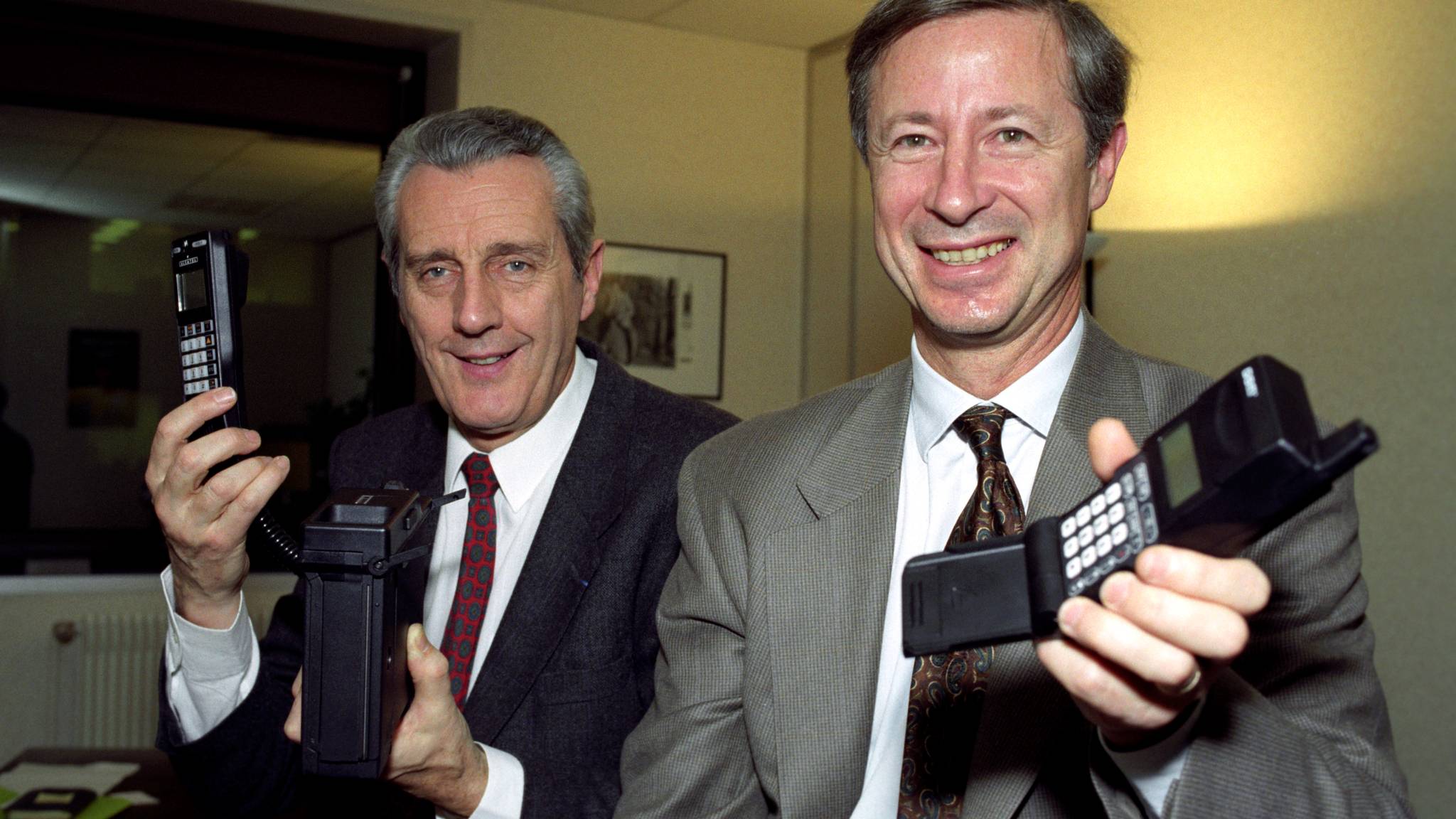 Duquenne with
GSM-phones.FOTO: Jon Hauge2